
207 lines
9.7 KiB
XML
207 lines
9.7 KiB
XML


<svg xmlns="http://www.w3.org/2000/svg" viewBox="0 0 560 700" width="560" height="700"
|
|
role="img" aria-labelledby="mj-title">
|
|
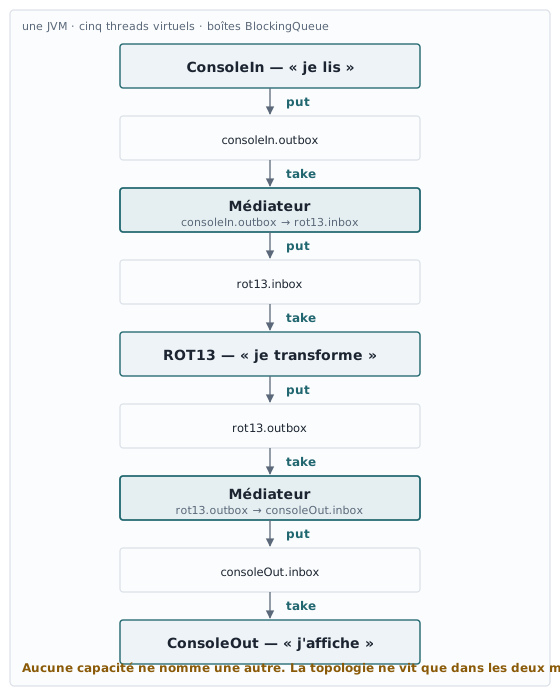
<title id="mj-title">La version médiatisée dans une seule JVM : ConsoleIn dépose un message dans consoleIn.outbox, un médiateur le retire et le dépose dans rot13.inbox, ROT13 le retire et dépose son résultat dans rot13.outbox, un second médiateur le déplace vers consoleOut.inbox, et ConsoleOut le retire et l'affiche.</title>
|
|
<style><![CDATA[
|
|
/* figures/diagram.css -- shared look of every built figure.
|
|
*
|
|
* build-figures.py drops this file into the style element of every built
|
|
* svg, so a figure carries its own styling and stays self-contained.
|
|
* Classes, not per-element fills, do the work: one edit here restyles the
|
|
* whole book.
|
|
*
|
|
* The palette is theme.scss's: teal #20666f for structure, amber #8a5a08 for
|
|
* the warning accent, ink #1b2430 for text, IBM Plex to match the page.
|
|
*
|
|
* Dark theme: the @media block follows the reader's system setting. librsvg
|
|
* ignores media queries when it makes the pdf, so print always gets the light
|
|
* theme -- which is what a printed page wants.
|
|
*/
|
|
|
|
svg {
|
|
font-family: "IBM Plex Sans", system-ui, -apple-system, sans-serif;
|
|
/* the figure sits on the page, not on a white card of its own */
|
|
background: transparent;
|
|
}
|
|
|
|
/* ---- surfaces ------------------------------------------------------- */
|
|
|
|
.box { fill: #eef3f7; stroke: #20666f; stroke-width: 1.4; }
|
|
.box-weak { fill: #eef3f7; stroke: #20666f; stroke-width: 1.4; }
|
|
.box-accent { fill: #e5eff1; stroke: #20666f; stroke-width: 1.8; }
|
|
.box-warn { fill: #f8f1e0; stroke: #8a5a08; stroke-width: 1.4; }
|
|
.box-plain { fill: #fbfcfd; stroke: #dae0e8; stroke-width: 1.2; }
|
|
.diamond { fill: #e5eff1; stroke: #20666f; stroke-width: 1.4; }
|
|
.ellipse { fill: #fbfcfd; stroke: #5a6879; stroke-width: 1.2; }
|
|
|
|
/* ---- lines ---------------------------------------------------------- */
|
|
|
|
.edge { fill: none; stroke: #5a6879; stroke-width: 1.3; }
|
|
.edge-strong{ fill: none; stroke: #20666f; stroke-width: 1.8; }
|
|
.edge-warn { fill: none; stroke: #8a5a08; stroke-width: 1.6; }
|
|
.edge-dash { fill: none; stroke: #5a6879; stroke-width: 1.2; stroke-dasharray: 5 3; }
|
|
.rule { stroke: #dae0e8; stroke-width: 1; }
|
|
|
|
/* ---- text ----------------------------------------------------------- */
|
|
|
|
.t { fill: #1b2430; font-size: 13px; }
|
|
.t-sm { fill: #1b2430; font-size: 11px; }
|
|
.t-lead { fill: #1b2430; font-size: 14px; font-weight: 600; }
|
|
.t-mut { fill: #5a6879; font-size: 11px; }
|
|
.t-key { fill: #1b2430; font-size: 12px; text-decoration: underline; }
|
|
.t-accent { fill: #20666f; font-size: 12px; font-weight: 600; }
|
|
.t-warn { fill: #8a5a08; font-size: 12px; font-weight: 600; }
|
|
.t-mono { fill: #1b2430; font-size: 11.5px;
|
|
font-family: "IBM Plex Mono", ui-monospace, Menlo, Consolas, monospace; }
|
|
|
|
.mid { text-anchor: middle; }
|
|
.end { text-anchor: end; }
|
|
|
|
/* ---- interaction ====================================================
|
|
* A .node groups one box with its labels. Hovering it lifts the whole group
|
|
* a little, which is enough to follow a path through a busy diagram without
|
|
* any script. Pointer events stay off the decorative layers so the hover
|
|
* target is the shape itself.
|
|
*/
|
|
|
|
.node { transition: opacity .12s ease; }
|
|
.node:hover .box,
|
|
.node:hover .box-accent,
|
|
.node:hover .diamond { stroke-width: 2.6; }
|
|
.node:hover .t, .node:hover .t-lead { fill: #20666f; }
|
|
|
|
svg:hover .node:not(:hover) { opacity: .55; }
|
|
|
|
/* a figure that marks no nodes must not dim on hover */
|
|
svg:not(:has(.node)) .node { opacity: 1; }
|
|
|
|
@media (prefers-reduced-motion: reduce) {
|
|
.node { transition: none; }
|
|
}
|
|
|
|
/* ---- dark theme ------------------------------------------------------ */
|
|
|
|
@media (prefers-color-scheme: dark) {
|
|
.box { fill: #1d2b33; stroke: #4c9aa5; }
|
|
.box-weak { fill: #1d2b33; stroke: #4c9aa5; }
|
|
.box-accent { fill: #24363d; stroke: #4c9aa5; }
|
|
.box-warn { fill: #332a18; stroke: #c99a3a; }
|
|
.box-plain { fill: #161b22; stroke: #30363d; }
|
|
.diamond { fill: #24363d; stroke: #4c9aa5; }
|
|
.ellipse { fill: #161b22; stroke: #8b98a8; }
|
|
|
|
.edge { stroke: #8b98a8; }
|
|
.edge-strong{ stroke: #4c9aa5; }
|
|
.edge-warn { stroke: #c99a3a; }
|
|
.edge-dash { stroke: #8b98a8; }
|
|
.rule { stroke: #30363d; }
|
|
|
|
.t, .t-sm, .t-lead, .t-key, .t-mono { fill: #e6edf3; }
|
|
.t-mut { fill: #8b98a8; }
|
|
.t-accent { fill: #4c9aa5; }
|
|
.t-warn { fill: #c99a3a; }
|
|
|
|
.node:hover .t, .node:hover .t-lead { fill: #7fc4cf; }
|
|
|
|
.arrow { fill: #8b98a8; }
|
|
.arrow-strong { fill: #4c9aa5; }
|
|
.arrow-warn { fill: #c99a3a; }
|
|
}
|
|
|
|
/* ---- arrowheads ======================================================
|
|
* marker contents cannot inherit the referencing element's fill, so each
|
|
* arrowhead is its own class and is themed alongside the line it ends.
|
|
*/
|
|
|
|
.arrow { fill: #5a6879; }
|
|
.arrow-strong { fill: #20666f; }
|
|
.arrow-warn { fill: #8a5a08; }
|
|
|
|
]]></style>
|
|
|
|
<defs>
|
|
<marker id="a" viewBox="0 0 10 10" refX="9" refY="5"
|
|
markerWidth="6.5" markerHeight="6.5" orient="auto-start-reverse">
|
|
<path class="arrow" d="M0,0 L10,5 L0,10 z"/>
|
|
</marker>
|
|
</defs>
|
|
|
|
<!-- one JVM, five virtual threads: the frame the whole chain lives in -->
|
|
<rect class="box-plain" x="10" y="10" width="540" height="676" rx="4"/>
|
|
<text class="t-mut" data-label="frame" x="22" y="30">une JVM · cinq threads virtuels · boîtes BlockingQueue</text>
|
|
|
|
<!-- 1. ConsoleIn ==================================================== -->
|
|
<g class="node" data-flow-node="consolein">
|
|
<rect class="box" x="120" y="44" width="300" height="44" rx="3"/>
|
|
<text class="t-lead mid" data-label="consolein" x="270" y="72">ConsoleIn — « je lis »</text>
|
|
</g>
|
|
<path class="edge" data-flow="1" data-flow-to="outbox1" d="M270,88 V114" marker-end="url(#a)"/>
|
|
<text class="t-accent" data-label="put1" x="286" y="106">put</text>
|
|
|
|
<!-- 2. consoleIn.outbox ============================================= -->
|
|
<g class="node" data-flow-node="outbox1">
|
|
<rect class="box-plain" x="120" y="116" width="300" height="44" rx="3"/>
|
|
<text class="t-mono mid" x="270" y="144">consoleIn.outbox</text>
|
|
</g>
|
|
<path class="edge" data-flow="2" data-flow-to="mediator1" d="M270,160 V186" marker-end="url(#a)"/>
|
|
<text class="t-accent" data-label="take1" x="286" y="178">take</text>
|
|
|
|
<!-- 3. first mediator =============================================== -->
|
|
<g class="node" data-flow-node="mediator1">
|
|
<rect class="box-accent" x="120" y="188" width="300" height="44" rx="3"/>
|
|
<text class="t-lead mid" data-label="mediator1" x="270" y="211">Médiateur</text>
|
|
<text class="t-mut mid" data-label="route1" x="270" y="226">consoleIn.outbox → rot13.inbox</text>
|
|
</g>
|
|
<path class="edge" data-flow="3" data-flow-to="inbox2" d="M270,232 V258" marker-end="url(#a)"/>
|
|
<text class="t-accent" data-label="put2" x="286" y="250">put</text>
|
|
|
|
<!-- 4. rot13.inbox =================================================== -->
|
|
<g class="node" data-flow-node="inbox2">
|
|
<rect class="box-plain" x="120" y="260" width="300" height="44" rx="3"/>
|
|
<text class="t-mono mid" x="270" y="288">rot13.inbox</text>
|
|
</g>
|
|
<path class="edge" data-flow="4" data-flow-to="rot13" d="M270,304 V330" marker-end="url(#a)"/>
|
|
<text class="t-accent" data-label="take2" x="286" y="322">take</text>
|
|
|
|
<!-- 5. ROT13 ========================================================= -->
|
|
<g class="node" data-flow-node="rot13">
|
|
<rect class="box" x="120" y="332" width="300" height="44" rx="3"/>
|
|
<text class="t-lead mid" data-label="rot13" x="270" y="360">ROT13 — « je transforme »</text>
|
|
</g>
|
|
<path class="edge" data-flow="5" data-flow-to="outbox2" d="M270,376 V402" marker-end="url(#a)"/>
|
|
<text class="t-accent" data-label="put3" x="286" y="394">put</text>
|
|
|
|
<!-- 6. rot13.outbox ================================================== -->
|
|
<g class="node" data-flow-node="outbox2">
|
|
<rect class="box-plain" x="120" y="404" width="300" height="44" rx="3"/>
|
|
<text class="t-mono mid" x="270" y="432">rot13.outbox</text>
|
|
</g>
|
|
<path class="edge" data-flow="6" data-flow-to="mediator2" d="M270,448 V474" marker-end="url(#a)"/>
|
|
<text class="t-accent" data-label="take3" x="286" y="466">take</text>
|
|
|
|
<!-- 7. second mediator =============================================== -->
|
|
<g class="node" data-flow-node="mediator2">
|
|
<rect class="box-accent" x="120" y="476" width="300" height="44" rx="3"/>
|
|
<text class="t-lead mid" data-label="mediator2" x="270" y="499">Médiateur</text>
|
|
<text class="t-mut mid" data-label="route2" x="270" y="514">rot13.outbox → consoleOut.inbox</text>
|
|
</g>
|
|
<path class="edge" data-flow="7" data-flow-to="inbox3" d="M270,520 V546" marker-end="url(#a)"/>
|
|
<text class="t-accent" data-label="put4" x="286" y="538">put</text>
|
|
|
|
<!-- 8. consoleOut.inbox ============================================== -->
|
|
<g class="node" data-flow-node="inbox3">
|
|
<rect class="box-plain" x="120" y="548" width="300" height="44" rx="3"/>
|
|
<text class="t-mono mid" x="270" y="576">consoleOut.inbox</text>
|
|
</g>
|
|
<path class="edge" data-flow="8" data-flow-to="consoleout" d="M270,592 V618" marker-end="url(#a)"/>
|
|
<text class="t-accent" data-label="take4" x="286" y="610">take</text>
|
|
|
|
<!-- 9. ConsoleOut ==================================================== -->
|
|
<g class="node" data-flow-node="consoleout">
|
|
<rect class="box" x="120" y="620" width="300" height="44" rx="3"/>
|
|
<text class="t-lead mid" data-label="consoleout" x="270" y="648">ConsoleOut — « j'affiche »</text>
|
|
</g>
|
|
|
|
<!-- side note: who holds the topology -->
|
|
<text class="t-warn" data-label="topology" x="22" y="672">Aucune capacité ne nomme une autre. La topologie ne vit que dans les deux médiateurs, démarrés dans main().</text>
|
|
</svg>
|